
Even before LinkedIn connections and Zoom calls, there was a scrap of thin cardstock that would be of more use than any device can ever be. These small rectangles were referred to as calling cards, and they possessed a silent power. They gave news of your arrival, stated your rank, and fashioned your initial impression that continues to echo in the current networking.
Today, as modern networking becomes increasingly digital, the essence of what these physical cards embodied still matters: intentional presentation, clear identity, and respectful communication.
These timeless principles continue to influence how we craft our digital introductions and establish trust in both personal and professional environments.
The Origins and Social Role of Calling Cards
Visiting cards, or calling cards, were popular in the 18th and 19th centuries both in Europe and America. The tradition can be dated even earlier: some sources indicate the early forms in 15th-century China.
Historically, when visiting someone, a visitor would leave a calling card at their doorstep to inform them of their arrival, particularly when the person who was being visited was not at home.
Gradually, cards were ingrained in etiquette. During the Victorian period, leaving a card with inverted corners or writing a note on the back passed a very direct message.
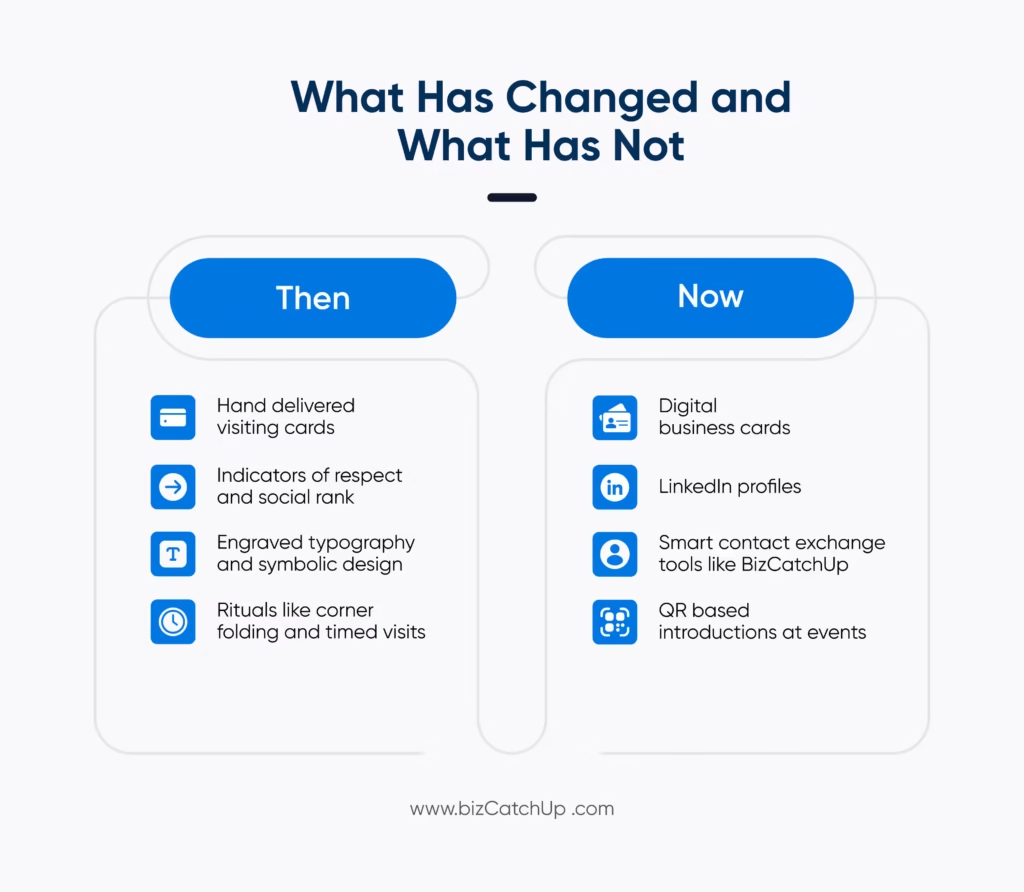
The design of the card, its texture, typography, and even the time of the visit were indicators of respect, intention, and social status.
Design, Etiquette, and Symbolism
Calling cards were not just social instruments. They were statements.
A properly designed card could have engraved typeface, family crests, or classy patterns. The design and quality spoke of the owner, whether it was a high-bred, wealthy, or mischievous person.
Manners regarding these cards were demanding. Historic guides claim that a man would use a tray served by a servant to present his card; a woman might leave her card twice, once to greet and once again to show respect.
Time was also important: calling hours were usually established in the afternoon, and visits were to be polite, although short.
How Calling Cards Declined and What Replaced Them
After the discovery of the telephone, email, and mobile communication, the convenience of physical calling cards started disappearing. The systems of social classes changed, and the strict etiquette that surrounded the calling card tradition relaxed.
But the spirit survived. The contemporary successors of the calling card are business cards, digital contact cards, and LinkedIn profiles. Other collectors even retain antique calling cards as objects, as a reminder of the care taken in each social encounter.
Why Calling Cards Still Matter for Personal Branding Today
Today, first impressions form quickly—research shows it takes just 7 seconds for someone to form an initial impression, reinforcing why intentional presentation still matters in modern networking.
We seldom leave a card on a mantelpiece nowadays, but the essence of a calling card, a managed first impression, is more important than ever. Clarity and purpose in the way we represent ourselves in a busy digital world can be the difference.
Two valuable lessons were taught by calling cards.
To begin with, each social interaction is a chance to send a message about yourself, who you are, and what you appreciate. Second, it should be thoughtful, i.e., considerate of how one will react to your introduction, which leads to trust and credibility.
When a digital profile is poorly made (or even unintelligible), it is even more noticeable; the same respect and attention paid to designing calling cards will enhance your personal brand.
As an illustration, platforms like BizCatchup are built for people who rely on strong introductions—like relationship builders. For them, a digital calling card isn’t optional; it’s a strategic asset.
How to Apply Calling Card Principles Now
The following is how anybody can introduce calling card values in contemporary networking:
1. Design modern calling cards
Prepare a purposeful and clean digital introduction with such tools as BizCatchup. Add your name, position, value statement, and contact information. You will be able to create a customized digital card using a QR code or a link and even make it usable in the Apple Wallet, allowing easy sharing.
2. Practice thoughtful etiquette
When communicating with someone, write a short and polite message rather than a blanket request. Follow up with care. This little act is a reflection of courtesy in leaving a calling card on a visit.
3. Keep your network organized
During the era of calling cards, individuals had albums or boxes that held the cards tidily. BizCatchup has features such as instant card scanning, auto tagging, smart sorting, team access, and analytics, which you can use today. It helps you maintain one of those neat networks and ensures that you do not lose valuable contacts.
4. Use the right format at the right moment
QR code cards provide immediate sharing at any event that does not require one to fumble with paper. In business-related emails, an effective signature is a contemporary calling card. A smart contactless business card via BizCatchup is easy and memorable in a face-to-face meeting.
How Calling Card Principles Shape Today’s Connections
The following are just some of the simple things that demonstrate how calling card values are useful today:
- You are more easily remembered with a clear and well-developed introduction.
- A neat and clean searchable address book lets you reconnect with an individual at the appropriate time.
- A clean, thoughtfully designed profile or business card builds trust faster than one that feels cluttered or confusing.
- A well-thought-out follow-up message would be far more than a generic one.
- How you project yourself offline or online determines the opportunities that arise in the future.
These minor iterations are indicative of current-day behavior, but they are also reminiscent of calling cards.
Conclusion
Calling cards may be a part of a different era, yet the principles behind them are eternal. They remind us that how we introduce ourselves—and the thought we put into that introduction—still shapes the connections we make.
The borrowing of the elegance, clarity, and etiquette of calling cards can be used to build more effective relationships in the digital world.
This is facilitated by digital tools such as BizCatchup. They enable you to share contact information immediately, manage your network, integrate with your CRM, and manage your digital identity, just as much work as people used to do on beautifully designed calling cards.
Take time to look through your online profile or business card. A single upgrade will add the mindful flair of the calling card culture and transform your networking experience into something worthwhile.
Quick Catch
1. What were traditional calling cards used for in professional and social networking?
Calling cards were small, elegant cards used to announce visits, express gratitude, or request meetings. They acted as early networking tools, helping professionals build relationships, signal status, and manage social etiquette before modern business cards existed.
2. How do calling cards differ from modern business cards and digital profiles?
Calling cards focused on personal identity and social etiquette, while business cards emphasize contact details. Unlike digital profiles, calling cards conveyed intention and respect—qualities that relationship builders and professionals still value today.
3. Why do calling cards still matter for modern networking and personal branding?
The principles behind calling cards—clarity, courtesy, and intention—remain crucial today. Professionals use these ideas to create memorable introductions, strengthen connections, and build trust across events, meetings, and online interactions.
4. How can relationship-driven professionals apply calling card etiquette today?
You can adapt calling card etiquette by offering concise introductions, following up respectfully, and maintaining consistent personal branding across touchpoints. These small signals help independent professionals and connectors stand out in crowded networking environments.
5. Are digital calling cards or smart contact cards modern versions of traditional calling cards?
Yes. Digital calling cards and smart contact tools modernize the concept by making exchanges seamless, trackable, and eco-friendly. They preserve the original purpose—creating meaningful, memorable introductions—while fitting today’s mobile-first networking culture.
