
Remember how networking used to happen not too long ago? A simple handshake, a smile, and the usual exchange of a paper card that often ended up in someone’s wallet or a desk drawer. It was a ritual everyone followed.
But have you noticed how lately, instead of exchanging their card, people take out their phones to scan a square of black-and-white pixels?
The Covid-19 pandemic made networking (just like everything else in the world) go contactless. While this was initially a temporary disruption, since the ‘new way’ offered more advantages, it has since become the norm.
As workplaces become more hybrid and professionals meet across both digital and physical environments, the need for faster, frictionless identity sharing has grown. Professionals are tired of entering their personal data on websites repeatedly and carrying physical business cards that get lost or thrown away.
This has created an environment in which efficiency is no longer a privilege but rather an expectation.
Following this need, business cards with scan codes have recently been showing up at meetings, conferences, networking events, and even cafes. The entire landscape of networking has transformed. Now, networking means tapping someone’s card on a phone or scanning a QR code. Or maybe someone asks, “Can I scan your card real quick?”
In this article, we are going to know how QR codes have found their place on business cards, why professionals now prefer such business cards and how they enhance accessibility and engagement.
The rise of QR-coded business cards in today’s networking
True to the saying “change is the only constant”, everything changes with time and requirements. So did the business cards and the way of networking. Professionals today move faster, meetings wrap quicker, conversations happen on the go, and decisions happen instantly.
In this environment, people are naturally drawn towards tools that keep up with their pace, and one such instance is the adoption of business cards with scan codes. Imagine instead of typing manually, you just scan a code and receive the entire repository of public information on a person (but that, too, is only what they have chosen to display). That’s what QR-coded business cards do.
QR codes aren’t just a trend; they are a sign of modern advancement. The global QR code market is estimated to reach USD 1.45 billion by 2033, which is proof of how quickly professionals are adopting QR-based networking.
Another reason for such a development is the growing preference for tech-forward, mobile-friendly interactions. As professionals juggle virtual meetings, rapid follow-ups, and cross-platform communication, they increasingly prefer tools that reduce friction and speed up connection-building.
The growing importance of technology that supports both virtual and quick engagement has resulted in many more forms of technology (including tools like BizCatchUp) that allow users to communicate and interact with each other by simply scanning a QR code.
Why professionals prefer business cards with scan codes
Networking isn’t a linear process of shaking hands and sharing information. A lot of actions like moving between sessions, joining calls, opening emails, or messaging someone you just met are happening simultaneously. This is where a business card with a QR code helps by making the exchange easier.
Let’s see the many ways these QR coded business cards help professionals and the reasons for their preference:
They enhance accessibility and efficiency
No typing, no searching, no saving numbers manually, one scan opens your full profile: your contact details, website, social links, portfolio, etc. And the good thing is that you don’t have to worry about them running out. Unlike traditional cards, they are saved on your phone, not in your bag, in limited quantity.
No typos, complete accuracy, and easy updates
It often happens that people get your number wrong or later forget your name. A digital card defeats these issues easily. You can easily edit and update your information to be accurate and up-to-date. Also, it is often verified and trustworthy if you are using a trusted third-party platform, like BizCatchUp, to generate your own business cards with scan codes.
Give off a modern impression
Staying updated and keeping up with the trends is essential in business. But that is not limited only to the market insights or consumer trends. How you interact with other professionals is also important to establish authority.
Imagine two scenarios from a professional meetup:
One, you are juggling through your pockets looking for your business card, while the other party waits.
Second, you take out your phone with a QR-coded digital business card, and the other party just has to scan the code and voila. They have your details instantly.
Which situation makes you look professional, modern, and someone who values their time?
Higher engagement
With every information just a tap away, people are far more likely to open your website or portfolio. Since people now have short attention spans, they don’t spend a lot of time on one thing. Therefore, the easier and time-saving the process of sharing and accessing information becomes, the more likely people are to access it.
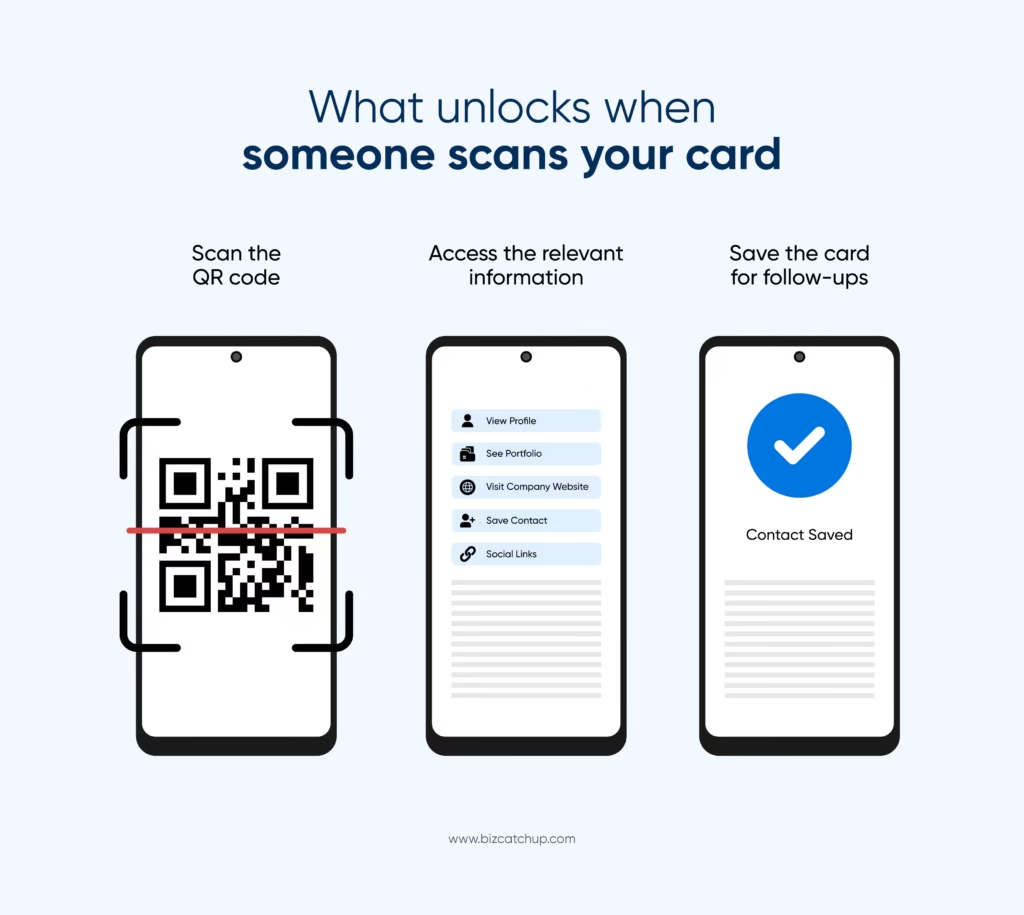
Digital business cards with scan codes make this process of accessing information so simple in just three steps:
- Scan the QR code
- Access the information you want to see as it appears on your screen
- Save the contact for future reference and follow-ups
Traditional vs modern cards: The bigger picture
A traditional business card only holds your basic information (name, contact details, etc.), making it quite basic. A QR-coded digital card goes way beyond that limit. Think of it as your professional directory, with your contact details, your websites, portfolios, videos, case studies, social channels, or any relevant information.
Think of a designer meeting a potential client: instead of saying “I’ll email you my work”, they give out a digital card that opens a curated portfolio instantly. Similarly, a consultant can attach an intro video. A fitness coach could link to transformation videos or a “book a session” page.
The possibilities are endless.
What more can you add:
- Social media profiles (LinkedIn, Instagram, Twitter, YouTube)
- Share your pricing guide, PDF intro deck, or onboarding guide
- Additional websites or personal pages
- Case studies, testimonials, your portfolio, or previous works
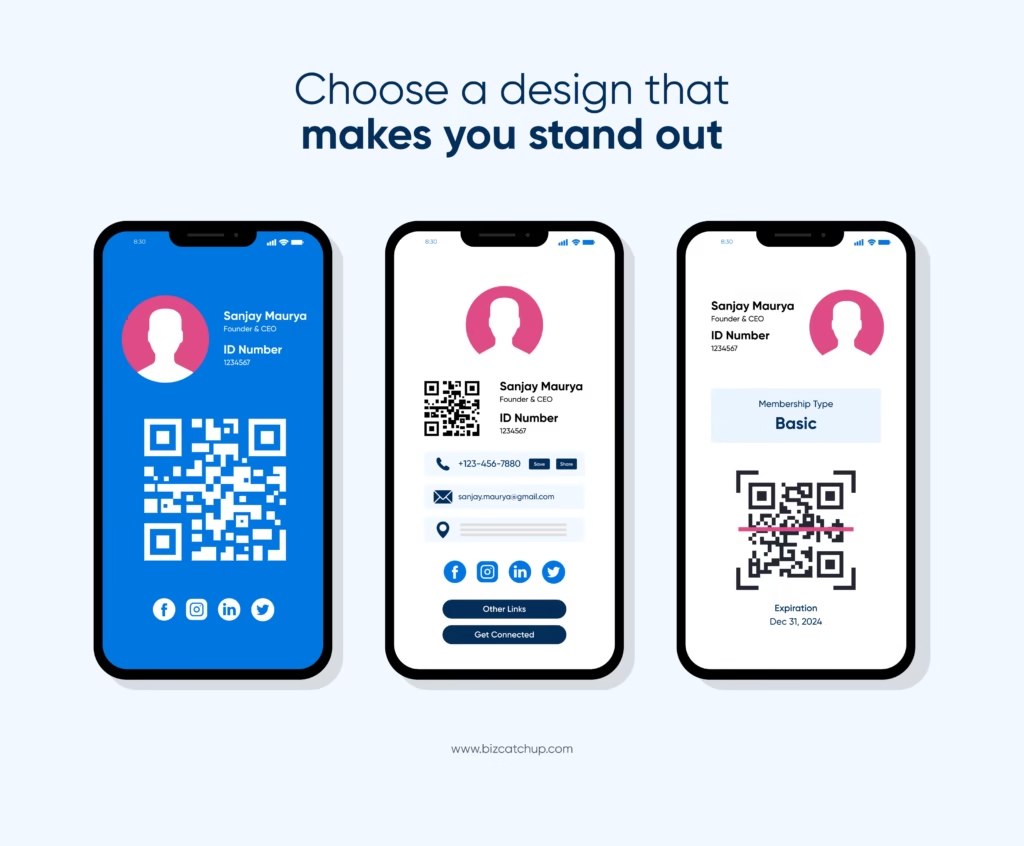
What design makes business cards with scan codes stand out
- Make sure your name is the most visually prominent element on your business card by using bold and easily readable font styles.
- Place the QR code on the right or bottom right side of the card, as it aligns well with the natural reading flow.
- Leave a space of at least 1cm on all sides of the QR Code so it can be easily read by a scanner.
- Use a clear hierarchy in the layout of the business card: Name, role, essentials, QR code.
Some don’ts of making a QR-coded business card:
- Avoid decorative elements around the QR code as they hinder scanning.
- Keep colour contrast in mind and avoid using camouflaging colours, for example, using light colours for both the background and the QR code.
- Don’t add too many icons or text blocks that make the whole card messy and cluttered
Using a digital business card app can make this process smooth by providing pre set templates and a single platform for saving and updating the cards.
What the future holds
Because of the increasing amount of activity taking place in a digital-first environment, professionals don’t want to waste even an ounce of their time. They want to connect quickly and easily with more digital tools.
As the inclination towards mobile increases, and instant results have become the norm, creating business cards with scan codes provides a way for professionals to connect more quickly and efficiently than they could ever do with traditional business cards.
The next generation of digital business cards will likely include context-aware sharing (showing different info based on location, event type, or who’s scanning), personalisation, and smarter follow-up methods.
Regardless of what features are included on these new digital business cards, they will allow professionals to identify themselves, connect with one another and be remembered by others without the use of a stationary item like a traditional business card.
QR business cards are a better way to give someone an introduction and remain relevant in a fast-paced society. Hence, the reason they are on the rise.
Quick catch
Why are Business Cards with Scan Codes becoming so popular today?
Business cards featuring scan codes are becoming increasingly popular, allowing instant access to contact information, websites, and social media profiles without requiring manual input. They simplify networking by removing barriers and supporting contactless interaction; they also make follow-up easier, especially in mobile-first business settings.
Are QR-coded business cards better than traditional paper cards?
Yes, business cards with QR codes provide greater ease of access and accuracy and have been shown to generate significantly higher levels of engagement than traditional paper cards. They don’t get lost, can be updated anytime, and encourage people to interact with your website, portfolio, or contact options instantly—something paper cards cannot match.
Do I need special tools to create scannable business cards?
Not necessarily. Many platforms allow you to generate scannable digital identity cards in minutes. Take BizCatchUp, for example. These tools help you add links, media, and updated contact info so your business cards with scan codes remain current and professional without reprinting.
How do digital business cards improve follow-ups after meetings or events?
With instant access to digital identities through these cards, businesses can easily manage their follow-ups with prospects. After scanning the card, all contact information is stored in the user’s phone with one click of a button. This quick, contactless exchange increases the likelihood of timely replies and stronger relationship-building.
