

Despite 79% of the professionals believing that networking is important in developing their careers, they do not stay in contact with their connections. Only, less than half—just 48%—will continue to contact others in their network when things go well.
Most people only pick up the phone when they need a job, a referral, or a favour. By then, it’s too late. The professionals who network most effectively don’t treat it as an emergency tool—they treat it as a daily habit. This guide will show you exactly how.
Nobody needs a refresher on networking, but you can always learn how it’s impactful today or how to amplify your efforts by seeing how others in the industry are leveraging their skills. Here’s how to get better at networking both in person and online.
Why Most People Struggle with Networking (And How to Fix It)
Most people dread networking because they approach it like a sales pitch. Entering a room with the mindset of “I have to impress everyone,” or “How can I get something from them?” puts this transactional mindset into your networking interaction. This turns every interaction into a labour-intensive and forced effort.
Networking should not be viewed as ‘collecting contacts’ but as ‘building authentic connections’. Consider your best professional relationships; they most likely originated when you had a relaxed and casual chat with someone about a common challenge, not when you memorised a sales pitch.
Rather than thinking, “How can this person help my career?”, try thinking “What is interesting about what this person does?” or “What is the greatest challenge that this person is facing, and do I have any insight?”
When you focus on providing value (helping others by offering useful information, connecting them with someone who may benefit them, or being sincerely interested in them), networking transforms from an exhausting task to an enjoyable conversation.

How to Get Better at Networking in Person
Start with Low-Stakes Practice
Walking into a 500-person conference as your first networking attempt is like learning to swim in the ocean. So, let’s start small:
- Join 15-20 person industry events where you can have conversations in an easier and more comfortable manner.
- Practice your introduction with coworkers.
- Establish reasonable expectations: 3 good, memorable conversations are better than 50 business cards collected.
One of the neatest hacks is to rearrange the way you introduce yourself. Are you another ‘sales consultant’? Or are you ‘the person who turns struggling sales teams into top performers’?
Master the Art of Genuine Conversation
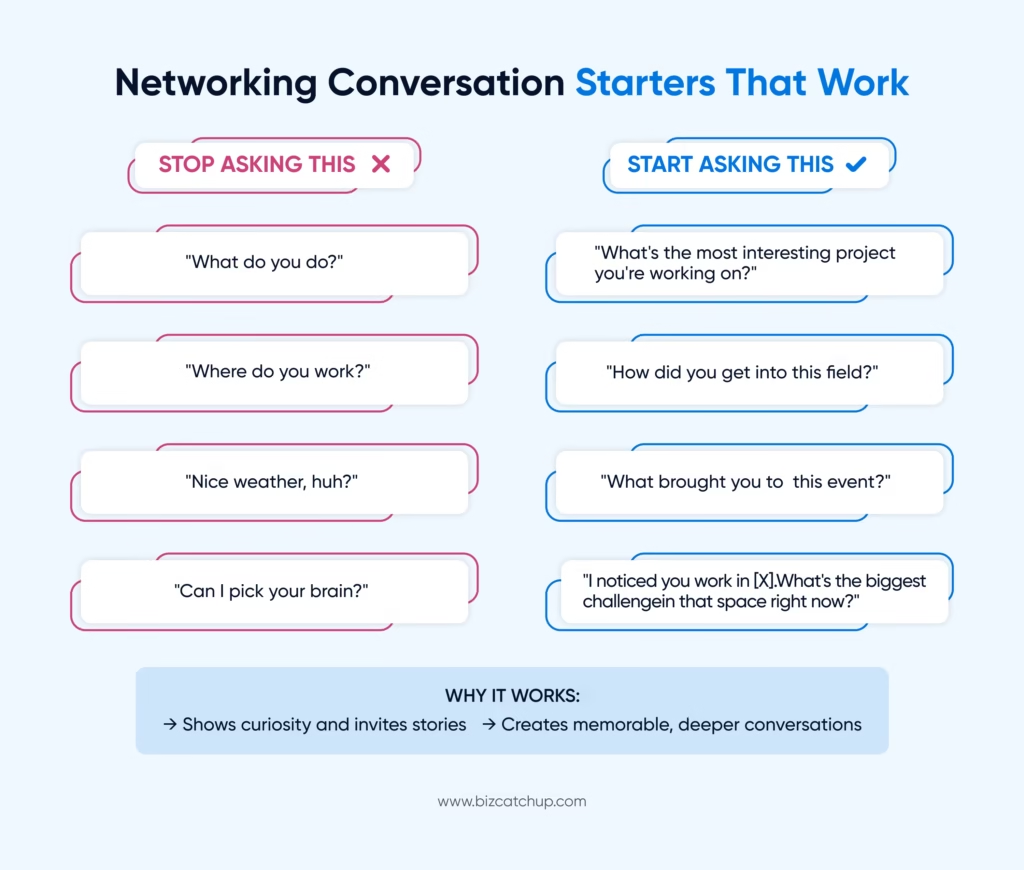
Encourage interesting stories with your question rather than just one-word answers:
- Instead of asking “What do you do?”, ask “What’s your latest, most interesting project?”
- Instead of asking “Where do you work?”, ask “How did you find your way into this career?”
- When stuck, ask about challenges: “What’s the hardest part of your role right now?”
Use the 80/20 rule: Listen 80% of the time, and talk 20% of the time. This is how to get better at networking in practice—curiosity builds connections faster than credentials ever will.
Strategic Follow-Up That Actually Works
The vast majority of networking stops there. You meet somebody fantastic, trade business cards and then never connect again.
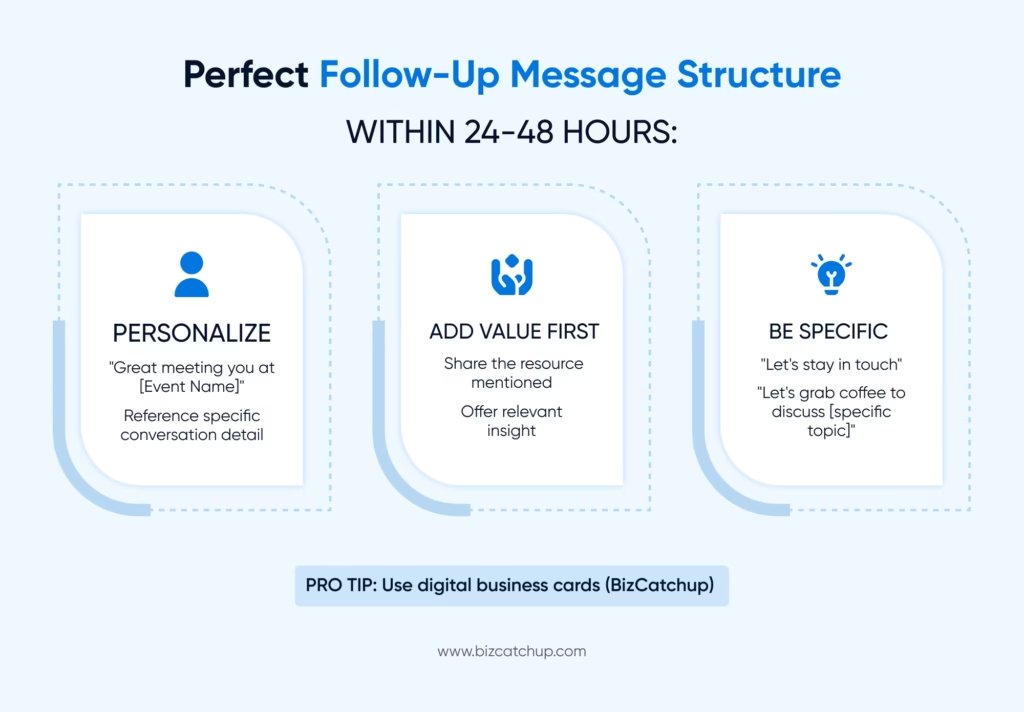
Follow up with your new contact within 24 to 48 hours. Use these tips:
- Reference a unique detail from the conversation you had: “I appreciated your perspective on [topic]”.
- Provide something of value: a relevant article, a helpful introduction, or a resource.
- Be specific about what you want to do next: “Can we meet for coffee to talk about [specific topic]?” instead of “Let’s keep in touch.”
Example message: “Had a great time meeting you at [event]. Here’s the article on customer retention I mentioned. Please let me know how your Q2 launch goes”.
Digital business card apps such as BizCatchup make it easy to follow up and keep contacts up to date with changes to their information, as well as tracking their engagement for timely follow-up.
How to Get Better at Networking Online
Build Presence Before You Need It
The greatest online networking error is to only appear when you require assistance. Instead, make sure that you consistently create your presence:
- Improve your LinkedIn headshot. Instead of saying “Customer Success Manager,” try saying “I help B2B SaaS companies reduce their customer churn”.
- Share useful insights consistently. It could be industry research or trends, lessons learned from your own experiences, or honest impressions about an issue. Consistency matters more than frequency; even monthly posts keep you top-of-mind if they’re genuinely helpful.
- Before requesting assistance, engage with someone in a meaningful manner. For example, adding thoughtful comments to their post before sending them a cold message.
The rule of thumb is to always provide 10 times the value to the other person before making a request.
Master Virtual Networking Events
Networking at virtual events is a huge opportunity that currently gets utilized too infrequently. Most attendees simply sit back and watch—but learning how to get better at networking online means actively participating:
- Turning on your camera (seeing someone’s face will build trust with them faster than just looking at their profile picture).
- Using chat intentionally by asking meaningful questions instead of just saying “great point!”
- Immediately sending personalized connection requests afterwards, like “I really liked your question about [specific subject] during today’s event”.
Turn Weak Ties into Strong Opportunities
Many of your strongest network connections are not those you have strong ties to, but rather those that you know somewhat casually:
- Make an effort to comment on your connections’ career updates and wins—not just because it’s nice but because it’s something good to do for the person.
- Share their posts and tweets when they add value for you or your audience.
- Congratulate them on their milestones personally (the personal note is always more valuable than the generic LinkedIn notification).
Here’s an example of informal networking: “I saw you launching in Europe, big achievement! I’d like to know how Q1 goes for you.”
Understanding how to get better at networking includes using tools that help you to easily track relationships across multiple networks and keep in touch with each important contact, so you are always in touch with them.
Universal Networking Strategies (Online and Offline)
Quality Over Quantity Always
- 10 authentic relationships will always outperform 100 superficial connections.
- Track your relationships instead of only your contact count.
- Nurture connections on a regular basis instead of only when you need something.
- Revisit old connections: a simple “I saw this article and thought of you” reactivates dormant relationships instantly.
Reality check: If you only connect to people when you want something, they notice.
Give Before You Ask
- Consider introducing contacts who could help each other: “I think you guys could really help each other, you are both working on the same thing from different perspectives”.
- Provide resources, insights, or opportunities without expecting anything in return immediately.
- Be generous with your knowledge: answer publicly, provide feedback and mentor as you are able.
- If someone accomplishes something great, make sure everyone sees you celebrating their success. They’ll remember you were there for them.
Consistency Beats Intensity
- Regular coffee chats build greater depth of trust than attending one major annual conference.
- Having small, consistent interactions is better than one or two occasions per year having grandiose interactions.
- Every month, block time to do a relationship check-in, as if you were doing it for business clients.
- Follow up on things people mentioned previously: “How did that product launch go?” shows you actually listened
Be Memorable, Not Just Present
- Create a unique, compelling response to “What do you do?” that piques interest.
- When you’re able, share an appropriate and meaningful personal story that reflects your vulnerability; it’ll help to build trust more quickly than presenting your qualifications or credentials.
- After every meeting, it is recommended that you send a written note to the person you met with, as these kinds of acts stick out in our digitally connected world.
- Leverage digital business cards in order to share your current information, no awkward “I’ve changed jobs since printing these” moments.
Remember: Networking isn’t an event—it’s a habit. The professionals who truly understand how to get better at networking show up repeatedly, contribute to others’ success generously, and view every relationship as a long-term investment worth nurturing.
Common Networking Mistakes to Avoid
Why do many people fail at networking? Many times, it’s because of bad habits that people unknowingly have:
Only talking about yourself. The best conversations happen when individuals feel like they were listened to, rather than being impressed by you.
Collecting contacts but never following up. Having 500 friends on LinkedIn does not count unless there is a genuine connection made.
Networking only when you need something. If you wait until you need a connection to develop one, people will see through your desperation.
General follow-up messages. “It was nice to meet you” has no connection. Your message has to be more specific, or you’ll never gain any traction.
Neglecting existing connections. Constantly pursuing new contacts without ever developing your valuable existing contacts is both very common and costly.
Forgetting names instantly. Repeat someone’s name naturally in conversation—”That was a great point, Sarah”—to help remember it.
Final Thoughts
How to get better at networking isn’t about making yourself an extrovert; rather, it requires you to be authentic.
Show up consistently, talk less than you listen, and offer value to others before requesting value from them. Build your professional network one meaningful conversation at a time, regardless of whether you’re networking online or face-to-face.
Quick Catch
Learning how to get better at networking as an introvert means starting small with focused events, not large conferences. Setting realistic goals, like three quality conversations instead of typically having dozens of cards, is recommended. Instead of trying to be the talkative extrovert, ask questions and listen to your connections. Introverts are naturally good at having meaningful conversations that establish stronger relationships.
Understanding how to get better at networking includes mastering follow-up. Plan to reach out to individuals within 24-48 hours, use key phrases from the previous conversation as reference points, and offer value to the other person before asking for something in return. When proposing next steps, be specific rather than vague.
How to get better at networking requires consistency over intensity. Aim for monthly coffee chats, weekly online engagement, and quarterly events. Regular small actions build deeper trust than annual conferences. Sustainable consistency—showing up repeatedly over time—creates the strongest professional relationships and opportunities.
To improve your networking skills, begin by asking invitation type questions, like, “What is the most interesting project your working on?” not “What do you do?”. Then follow the 80/20 rule; you should listen to 80% of what they say and only talk about the other 20%. Demonstrate a genuine interest in their challenges instead of trying to pitch yourself right away
