

A recent meta-analysis by Gallup shows that teams with high engagement have 23% higher profits than those with low engagement. However, individual networking alone won’t build that kind of team advantage.
Team networking has become the norm for successful professionals today. Today’s leading professionals will not only build a personal network but also assemble a team-wide networking strategy to create a compounding competitive advantage.
Individual networking is still important, but when team members coordinate their connections and strategically share contacts, they can increase each other’s reach to an exponential degree.
The following guide provides strategies for networking and collaboration for both individuals and teams, because in today’s collaborative workplace, the strength of your network depends on your team’s collective reach.
Why Networking Strategies Need to Evolve for Modern Professionals
Ten years ago, networking meant conference halls and business card exchanges. Today? The most valuable contact you have may be found through a meaningful LinkedIn comment, a chat on Slack, or a Twitter (X) thread you posted at midnight.
The way we create new working relationships has changed with remote and hybrid working. You can no longer run into colleagues at the same office across town and grab coffee on a whim. Colleagues from different industries aren’t in the same physical space anymore. The decision maker you want to connect with is inundated with generic requests for connections via LinkedIn.
People who networked well in 2015—by collecting business cards and sending follow-up emails—would consider these practices as obviously out of date now.
Networking successfully today involves adopting modern business networking strategies such as::
- Creating online visibility where conversations are happening—such as in niche Slack communities, on Twitter, and through virtual events.
- Sharing insights before asking for something from someone, and
- Utilizing tools that allow for scalability of networking through building authentic relationships.
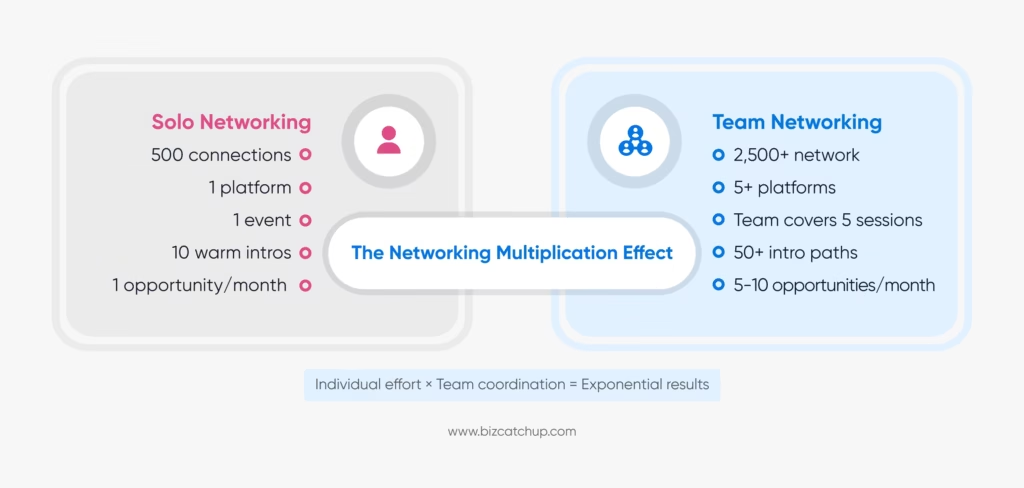
The professionals and teams that change their approach to the way they network to reflect today’s environment create compound advantages over their competitors that cannot be matched.
Individual Networking Strategies for Modern Professionals
Build a Multi-Platform Presence
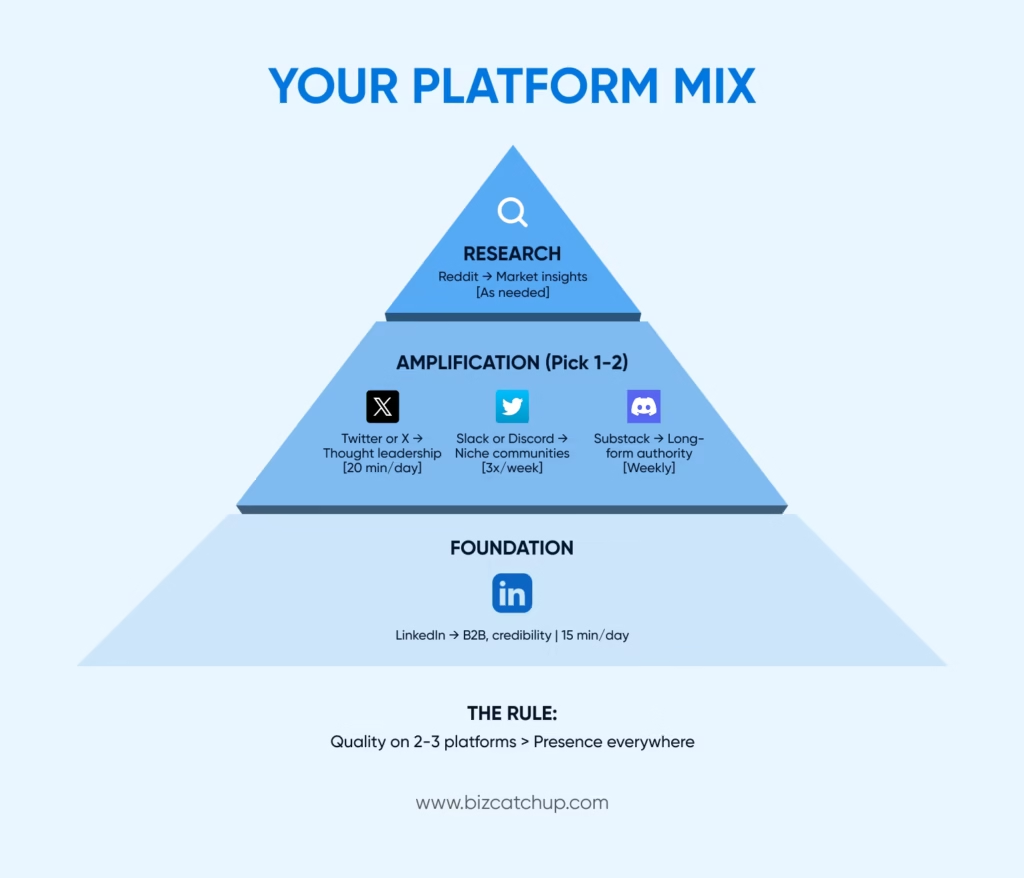
LinkedIn isn’t the only place for your ideal connections. Your potential connections can easily be found all across the internet. There are debates among leaders of your industry on X, and niche communities are thriving in Slack and Discord. You can even find candid discussions on Reddit that you’ll likely never see on LinkedIn.
Focus on two or three social media platforms that actually engage with your target audience, instead of using multiple platforms simply because people have profiles there.
The “Give First” Content Strategy
Provide value to others, prior to asking for something from them. Help others by answering questions asked by members of communities you participate in (e.g., post lessons learned), and equally important, by thoughtfully commenting on other people’s posts.
Example: When a marketing consultant participates in a startup-related Slack community and responds to questions regularly, the consultant responds to the client’s inquiries without a sales pitch to the requester. By being genuinely helpful, they have sold themselves.
Strategic Relationship Mapping
Identify your network gaps—who don’t you know that you should? Find your connectors between multiple industries and communities. Your second-degree connections are an absolute goldmine.
Use LinkedIn’s filters as a tool to show who knows whom—and map intentionally, rather than just accumulating randomly.
Asynchronous Networking Tactics
Not everything needs a meeting. Consider sending thoughtful but quick voice notes, making Loom videos for your individual outreach, or just posting substantive comments rather than generic direct messages.
Example: “I read your newsletter last week, and your point regarding the need for customer retention made me think about this case study” beats “I’d like to connect!” every time. You can develop relationships through networking without having to play calendar tetris.
Team-Based Networking Strategies That Scale Impact
Create a Shared Contact Database
When three different team members connect to a single prospect without realizing it, they can appear disorganized. Keep all your team contacts in a centralized place (CRM or shared platform). Use tags for contacts by their industry, speciality, and strength of relationship.
By using a digital business card app such as BizCatchup, team members can immediately send each other the same contacts, thus eliminating duplicate connections and the possibility of losing an opportunity.
Collaborative Content Networking
Expand each other’s networks. When one of your team members publishes an article, everyone in the team shares the article. When one team member is a guest on another’s podcast or webinar, both of your networks benefit from this exposure.
When the entire five-member agency shares one another’s LinkedIn posts, the agency reaches five times more people than if the members each posted on their own.
Networking Role Specialization
Assign team members to different platforms or places to connect as part of your team networking strategies. One member might have to handle Twitter, another checks Slack, and then someone goes to events.
At the event, have the different members go to different forums, and all meet weekly to go over the things they gather from there. Having everyone divide up and collect will be a more effective way to network at an event than having the whole team do the same thing.
Warm Introduction Chains
Building an internal list of “Who knows someone from [target company]?” becomes your team’s greatest asset. Create a simple template for requesting introductions from teammates.
Your sales team wants to reach a VP of Marketing at a target company. A quick check reveals your product manager worked with her previously. That warm intro gets a meeting. A cold LinkedIn message gets ignored.
For example: “Hey Sarah, remember when we collaborated on that product launch? I’m working with an amazing team now that I think could help with the challenges you mentioned about customer onboarding…”
Track all of your introductions to see which ones result in opportunities. This measurement is essential for refining your team networking strategies and identifying who on your team is the best connector.
Account-Based Networking (ABN)
Define your target companies and who makes the buying decisions. Have touchpoints that provide value upfront from multiple team members (strategic, not creepy).
Example: Sales representative connects on LinkedIn, marketer shares a relevant case study, and CEO comments on their article. Coordinated visibility without spam.
Modern Networking Tools and Platforms
Beyond LinkedIn: Where Modern Networkers Connect
Here’s where you can find networking options:
- Twitter (X) – Real-time industry conversations and thought leadership
- Slack or Discord – Niche professional communities and daily engagement
- Substack – Long-form insights
- Reddit – Unfiltered discussions about your industry
You should choose where to go based on where your audience engages, not just where they are.
Automation Without Losing Authenticity
You can use a customer relationship management system to track relationships and conversation history. Platforms such as BizCatchup allow teams to create smart business cards and instantly and accurately share contacts. Calendar tools will help schedule regular, ongoing touchpoints without the need for manual reminders.
The key is to automate logistics and personalize your communication. Templates create efficiency, while personalization builds trust.
Team Collaboration Platforms
Shared contact databases allow for reduced duplication of outreach efforts. Note-taking systems provide relationship context. Automated reminders for follow-up ensure that no connection becomes stale.
The ability to seamlessly integrate networking tools and project management software allows you to turn your contacts into collaborators with ease.
Measuring the Impact of Your Networking Strategies
Considering other factors in addition to the number of connections is good for a successful networking experience. You should measure the following quality metrics:
- Referrals received
- Number of opportunities generated
- Partnership created
- Conversion from introductions made
Team metrics to count:
- Network coverage on key industries
- Introduction conversion
- Utilization of shared contacts
Review monthly: Which business networking strategies are working? Which platforms deliver results? Which team members are the best connectors?
Be data-driven in your decision-making. If you’ve been using Twitter for three months to create opportunities and have generated nothing, it’s time to shift your focus elsewhere and invest your time back into what produces results.
Common Networking Strategy Mistakes
- Broadcasting as opposed to engaging. When you post content and don’t respond to comments or participate in conversations, you essentially become invisible
- Networking isn’t a one-off event, don’t treat it as one. It requires ongoing attention to establish and continue a relationship.
- Having no follow-up process. Great contacts are useless if they are not followed up within 48 hours.
- Teams work in silos. If no one internally shares their connections with others, you are wasting the collective power of your network.
- Depending solely on one social networking site. If LinkedIn changes its algorithm tomorrow, your entire network shouldn’t disappear.
- Relationship building should not occur only when you’re in a desperate situation. Building relationships before you need them will prove beneficial in the long run. Knowing how to network efficiently helps.
Final Thoughts
Modern networking strategies integrate individual initiative and team collaboration. Technology allows for a high level of scalability; however, authenticity is what ultimately prevails. The most successful networkers create systems instead of merely developing their connections.
Begin implementing a new networking strategy today. Measure its success over a period of 30 days. From there, continue to use what has shown success, and discard what has been unsuccessful.
Quick Catch
What are the most effective networking strategies for remote teams?
Establish unified contact databases as a means of avoiding duplicate outreach. Determine which team members will use each platform, or community and how you will create warm introduction chains internally. Leverage digital business cards as well as CRM solutions for consolidating connections and tracking relationship development through the whole team.
How can teams share networking contacts without being disorganized?
Utilize a centralized CRM system or digital business card platform like BizCatchup to tag contacts by industry, relationship strength, and opportunity type. Create a simple internal process for requesting introductions and track which team member made the connection so you do not duplicate outreach.
What’s the difference between individual and team networking strategies?
Individual networking strategies build personal connections through multi-platform presence and content sharing. Strategies for team networking scale impact through coordinated outreach, shared contact databases, collaborative content amplification, and warm introduction chains that leverage collective relationships rather than individual connections alone.
Which platforms should professionals focus on for networking in 2026?
Twitter for industry conversations, Slack and Discord for niche communities and Substack for thought leadership should be considered in addition to LinkedIn. The most appropriate platforms will depend on engaged people in your target demographics. Focus on quality engagement vs quantity of presence.
How do you measure if your networking strategies are actually working?
Utilize data to measure success through quality metrics, such as referrals compiled, opportunities created, partnerships created, and introductions converted. Additionally, measure team coverage at the target industry level and the (shared) contact usage rate. Review metrics each month and modify methods based upon data, i.e., continue to pursue what works, and stop pursuing what doesn’t.
